How to Create a Loan App: Your Playbook to Launch Fast and Attract Users
 14 Minutes read

I’ve always been fascinated by how a suit can command trust. In boardrooms and banks, it’s like a uniform for credibility.
But times have changed.
55% of Americans now manage their money primarily through mobile apps, while just 8% still visit a branch (ABA).
It’s tempting to think that screens have become more trustworthy than a bank teller in a crisp suit. But when you dig deeper, the story shifts.
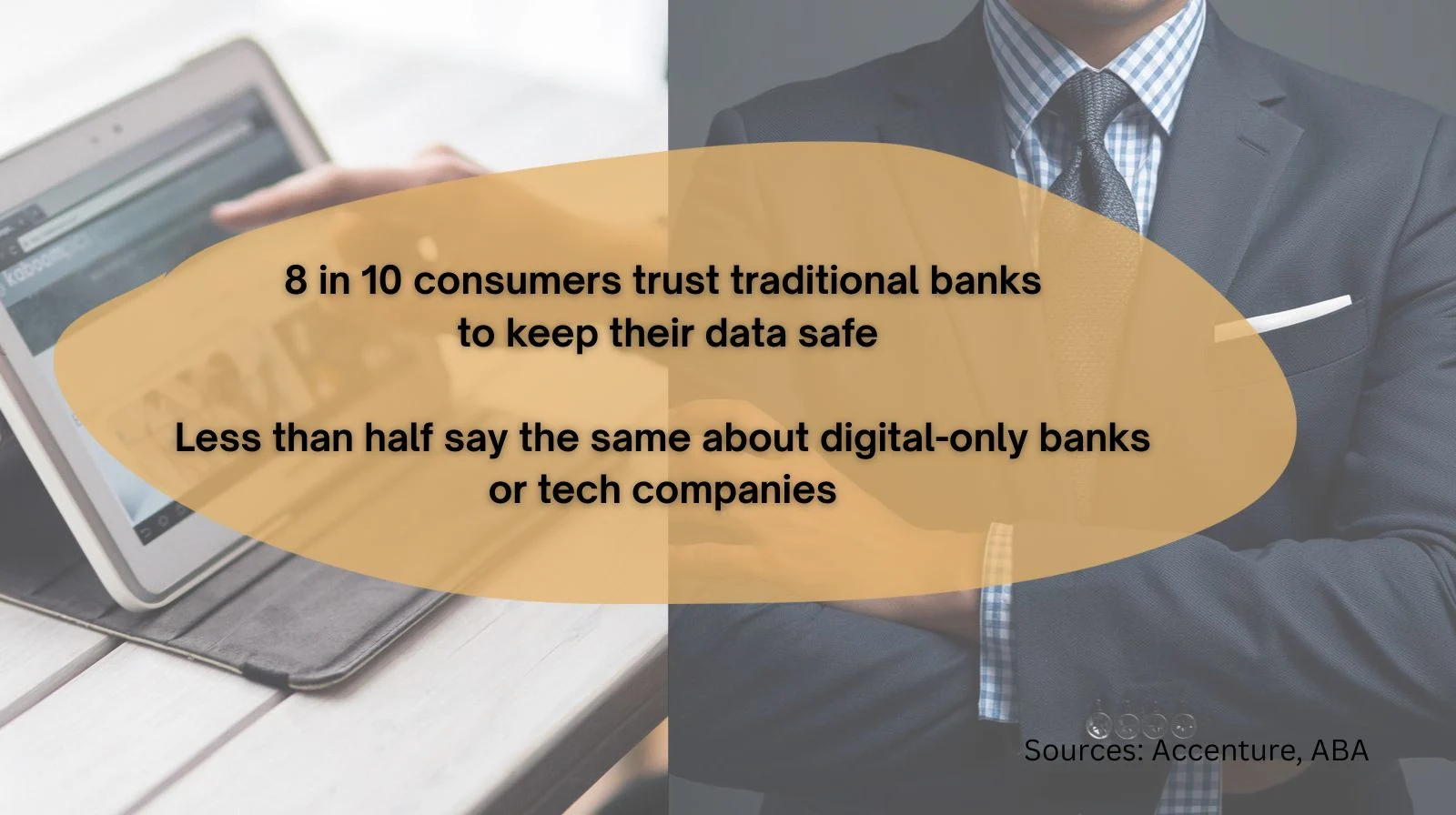
Eight in ten consumers say they trust their traditional bank to keep their data safe—but fewer than half say the same about digital-only banks or tech companies (Accenture/ABA).
So people are basically saying:
“I’ll use the app because it’s convenient, but if things go sideways, I still want the guy in the suit.”
Convenience meets credibility. That’s the sweet spot loan apps are playing in.
The industry didn’t blow up into a $20+ billion market because people stopped liking banks. It’s because smartphones made borrowing frictionless.
The challenge now? Building an app that feels just as reliable as walking into a branch.
In my research, I found that this balance is where most loan apps struggle. Some overcomplicate the experience, others overlook trust altogether.
So if you’re planning to build one, here’s how I’d approach creating a loan app that feels both secure and simple.
How to Build a Loan App That Feels Secure and Simple
Step 1: Understand the lending landscape
At its core, a lending app is simple: ask for money, get money, pay it back—all in a few taps. But the devil is in the details. Every tap hides layers of rules, risk checks, and regulations.
A student in California and a shop in Berlin might both want cash, but the laws that govern them couldn’t be more different. That’s what makes lending apps tricky to build.
So how should you approach things?
- Start by listing all the licenses, approvals, and reporting requirements for every region you plan to operate in.
- Talk to a compliance expert or legal advisor early, and document how your app will handle things like credit checks, data privacy, and anti-fraud measures.
- Then, design your app’s workflow so users can complete requirements smoothly—like submitting documents or verifying identity—without friction.
Doing these steps upfront can save you costly delays, rejected applications, or legal headaches down the line.
Some relevant resources I’ve gathered that may help you if you’re thinking about building a lending app:
|
2. Define your loan app users
You wouldn’t design a luxury sports car for someone who just needs a reliable commuter. The same goes for loan apps.
Get crystal clear on who you’re building for. Start by mapping out who your ideal users are and what their daily money challenges look like.
Are you helping small business owners get $5k–$50k loans, students chasing microloans, or payday borrowers in a pinch?
Each group acts differently: their income flows, repayment habits, and even the rules you have to follow can’t be more different.

Here’s how to make it actionable:
- Segment your audience. By loan size, income, and purpose.
- Dig into their pain points. What’s frustrating or risky about borrowing today?
- Pick your first target carefully. Focus on the group you can serve best and expand later.
Do this first, and every interview, design choice, and compliance check that follows will make sense. You’ll avoid wasted effort and build a product people actually want to use.
3. Talk to your intended loan app users
The best loan apps don’t start with every feature. They start with proof.
Before you design onboarding screens, talk to actual borrowers. Ask what would make them trust an app with their money. Watch them use apps (even paper mocks). Notice where they hesitate, what confuses them, and which steps make them abandon a flow.
Quick interviews, usability tests, or shadowing a small business owner will teach you more than analytics ever could.

4. Pinpoint essential lending app features
You’ve talked to your users, seen where they struggle, and know what frustrates them most. Now it’s time to strip your loan app down to the essentials: what actually solves your users’ problems.
Ask yourself: “What will make borrowing fast, simple, and trustworthy for these users?” Your research will likely highlight essentials like:
- Quick, secure onboarding so users feel safe handing over their info
- Clear loan terms and repayment schedules to avoid confusion
- Real-time notifications for approvals, reminders, and updates
- An intuitive dashboard so they can track balances and due dates easily
Until these core functions work flawlessly, don’t waste time and money on flashy graphics. After all, users won’t remember a beautiful splash screen if your app crashes, miscalculates loans, or delays their funds.
The loans you offer shape who uses your app, how often, and how much trust they place in you.
Here are some common options to consider:
What are the different types of loans?
| Loan Type | How It Works | Ideal Uses |
|---|---|---|
| Term loans | Borrow a fixed amount and pay it back in installments over time. | Big expenses like payroll, inventory, or equipment. |
| Lines of credit | Borrow money whenever needed, up to a set limit. | Flexible cash flow needs; keeps users returning regularly. |
| Invoice financing | Get cash for completed work without waiting for client payments. | Small businesses managing cash flow. |
| Peer-to-peer lending | Borrow directly from other users or investors instead of a bank. | Users looking for more funding options and faster access. |
5. Design your app interface
After nailing what your app does, your next focus is the user experience. In other words, how it feels to actually use it.
A great user experience is about making every interaction smooth, intuitive, and trustworthy. I like to think of it like walking alongside a user, step by step.
Here’s how I’d approach it:
Step 1: Map the full user journey
Start by imagining a user opening your app for the first time. Break the experience down from start to finish:
Opening the app → Signing up → Applying → Verification → Approval → Funds transfer → Repayment
Seeing the journey laid out this way helps you understand every touchpoint and sets the stage for spotting where things could go off track.
Step 2: Identify friction points
Put yourself in your users’ shoes. Thinking like a user early on helps you tackle problems before they become frustrations.
Ask:
- How long does KYC take?
- Are notifications clear?
- Could users abandon the process midway?
Step 3: Sketch screens and flows
This is when you turn abstract ideas into real, testable screens. Grab a pen and paper or use a wireframing tool and sketch out every screen your users will see:
- Login page – How do users sign in? Is it simple and clear?
- Signup form – Are the fields easy to understand and complete?
- Application flow – Step through each action: applying, verification, approval.
- Key alerts and messages – How will you notify users of errors, confirmations, or progress?
Keep it simple. Every interaction should be obvious, so users never have to guess what to do next.
Step 4: Test Early
Before committing to high-fidelity design, have 3–5 real users walk through your sketches
- Observe where they hesitate
- Note what confuses them
- Make changes immediately
Testing early is cheap, fast, and saves huge headaches down the line.
6. Choose the right tech stack
For financial apps, the stack has to cover three big jobs: calculating interest, checking credit, and moving money.
Here’s how you get there:
- Pick a stable backend language. Java, Python, or Node.js are common choices because they can process transactions quickly and securely.
- Set up a reliable database. Go with options like PostgreSQL or MySQL to store user data, loan details, and repayment history safely.
- Add financial APIs. Use APIs for credit scoring, ID verification, and bank connections so the app can check borrowers and transfer funds.
- Secure everything. Encrypt sensitive data, use two-factor authentication, and make sure your system complies with financial regulations (like PCI DSS).
- Plan for growth. Host your app on a cloud platform (AWS, Azure, GCP) so it can handle more users without crashing.
See related article: The 8 Most User-Friendly Mobile App Development Tools
7. Develop and test like real money is on the line
One thing you have to understand when building a lending app is that people’s money is literally at stake. That changes everything. You can’t rush. You can’t assume it’ll probably work. Every tap, every swipe, every confirmation has to be rock-solid.
Think of development like running a series of mini experiments. Start small and focus on the essentials first:
- Signing up – Make it quick and intuitive
- Verifying identity – Keep it secure but friction-free
- Submitting applications – Make the flow seamless
- Transferring funds – Ensure speed and accuracy
Once these core flows feel smooth, you can layer on extras, such as push notifications, progress indicators, or helpful in-app tips.
Development is where your app starts to come alive, but it’s also the point where things can break if you’re not careful. That’s why testing has to be treated as part of development, not a final step.

Put yourself in your users’ shoes. What happens if they mistype information? Or skip a step? Does the app still guide them clearly, without panic or confusion? Even small moments of hesitation can erode trust. And with money involved, trust is everything.
8. Put your lending app in front of real users
This is where all the late nights, sketches, and tests finally meet reality and see if it actually works for real users. My advice here would be the same as I’ve been saying throughout the article: Start small and test early.
Begin with a soft launch. A small group of users can reveal the little things you may never have noticed:
- Where do they pause or hesitate?
- Which messages confuse them?
- Is money moving exactly as it should?
Even small hiccups matter. We’ve seen apps with perfect designs stumble because of one tiny friction point that slipped past testing. That’s why you should treat analytics and feedback like gold. Every tap, swipe, and completed transaction tells you what’s working and what’s tripping people up.
Once everything is smooth and reliable, go for the full launch. But remember: launch isn’t the finish line. With a lending app, you keep iterating, improving, and making sure users always feel safe and confident.
Build a lending app that inspires confidence
A successful lending app gives users a feeling of stepping behind a teller counter. Every interaction, message, and confirmation carries weight. Users notice friction, confusing steps, or slow responses.
That’s why my advice throughout this guide has stayed the same: start small, test early, and keep iterating.
Build an experience that doesn’t just work but feels reliable, clear, secure, and reassuring. Do that, and your app earns trust the same way a perfectly tailored suit does—effortlessly and confidently.
Want your app to inspire confidence with every tap? Drop us a message and let’s chat.
People also ask
1. Are mobile banking and lending apps safe to use?
Yes—when built properly. Trust comes from strong security, clear data handling, and predictable user flows. If an app feels transparent and reliable, users are far more comfortable managing money digitally.
2. Why are banking apps so popular?
Most people love speed and simplicity. More than half of Americans manage money on apps, while under 10% still visit a branch. Swiping beats waiting in line every time. (ABA)
3. Are lending apps profitable?
Absolutely. Lending apps earn from interest, fees, and commissions. The apps that scale don’t just break even—they make serious profit. That’s why investors are pouring billions into digital lending.
4. What do users look for in a lending app?
Users want speed, clarity, and trust. That means:
- Fast, simple onboarding — sign up and start borrowing without headaches.
- Transparent terms — clear rates, fees, and repayment schedules.
- Quick approvals and transfers — nobody wants to wait days for funds.
- Strong security and compliance — users need to feel their money and data are safe.
- Intuitive design — easy navigation beats flashy graphics every time.
- Accessible support — help should be a tap away.
Bottom line: Make borrowing simple, safe, and predictable — visuals are bonus icing, not the cake.
5. Should I launch a lending app with all the features?
No. In fact, it could backfire. More features mean more friction, bugs, and confusion. The best lending apps solve one problem well before adding extras. Start lean, learn from real user behaviour, then build what actually matters.
6. How important is compliance in a lending app?
Compliance is non-negotiable. Data protection and lending laws directly affect whether your app can legally operate.
7. Do small businesses use lending apps?
Yes. Whether it’s for payroll, inventory, or last-minute expansion, lending apps deliver cash faster than traditional banks. Some even connect businesses directly with investors, matching capital with the needs of the business.
8. Why do users abandon lending apps mid-application?
Too many fields, confusing terms, or slow approvals. Users just want fast, clear, and easy borrowing. Anything that feels like extra friction often makes them bail.
Jane Eslabra has 14+ years of experience producing content across traditional and digital platforms. She channels her strong passion for fostering tech startup growth through knowledge sharing.